


Why Your Content Isn't Working Anymore
Something broke in the last 18 months. Your blog posts used to bring in steady traffic. Now they're sitting there, getting crickets. Your competitor—the one with half your staff—somehow publishes three times as often and shows up everywhere you look.
I've been watching this pattern unfold across dozens of small businesses. The owners work harder, write more, and see less return. Meanwhile, nearly 800 million people per week now use ChatGPT to answer questions, compare options, and plan purchases. That's not a typo. Eight hundred million. Weekly.
Here's the part that explains your traffic drop: AI-powered search features have reduced organic traffic by 15-64% across websites. Google's AI Overviews, Perplexity, ChatGPT—they're all answering questions that used to send people to your site. The game changed, and nobody sent you the memo.
In a minute, I'll show you why the businesses winning right now aren't just using AI—they're using it in a specific way that most people get backwards.
What Changed in Content Marketing (And Why AI Is the Cause and the Cure)
The use of AI in marketing has more than doubled over the past five years. That's not a prediction—it already happened. And 86% of marketing professionals report that AI makes their work more efficient.
But here's where it gets interesting for small business owners: the same technology eating your traffic can become your unfair advantage. The companies achieving 30% faster revenue growth aren't the ones with bigger budgets. They're the ones who figured out the right way to partner with AI tools.
Think about it like this. Paid ads stop the moment you stop paying. Content keeps delivering value long after you publish it. That fundamental truth hasn't changed. What changed is how fast you can create that content—and how well you can target it to the right people.
Consumers increasingly rely on AI tools like Perplexity, ChatGPT, and Gemini to make purchasing decisions. If your content isn't showing up in those AI summaries, you're invisible to a growing chunk of your potential customers.
How Does AI Content Marketing Actually Work?
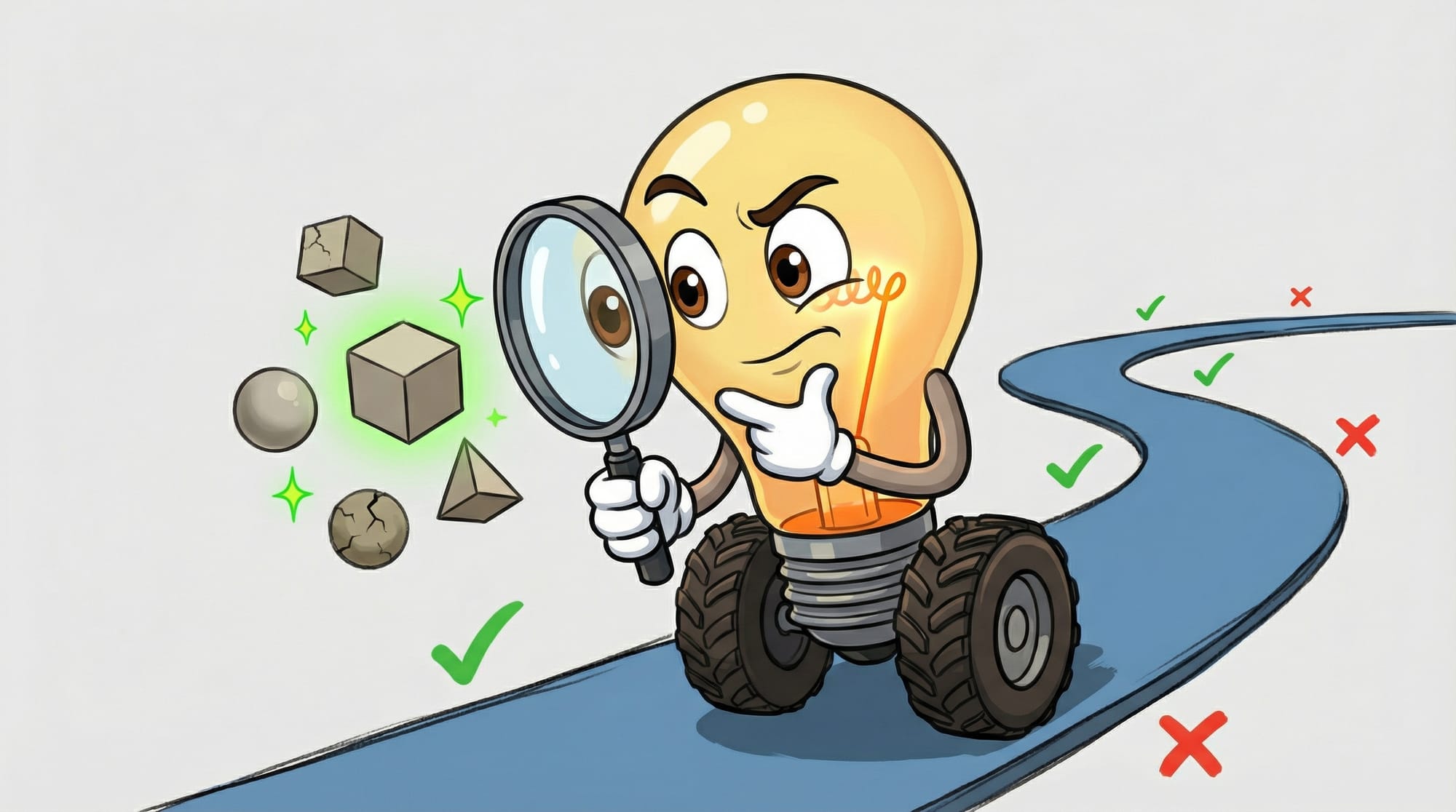
Let me cut through the confusion. AI content marketing isn't about letting robots write your stuff. It's about using AI tools as assistants while you stay in the driver's seat.
Here's what the tools can actually do well:
- Keep your brand voice consistent across dozens of pieces
- Identify gaps in what your competitors are covering
- Personalize content for different audience segments without rewriting everything
- Repurpose your videos and webinars into blog posts, social content, and email sequences
That's not hype—that's what practitioners report after testing these tools in real campaigns. The key phrase there is 'after testing.' Because plenty of businesses try AI content tools, get garbage results, and blame the technology.
The difference isn't the tool. It's how you use it.
The Human-AI Content Partnership Framework
After watching which approaches actually work, I've landed on a framework that keeps you in control while capturing AI's speed advantage.
**Step 1: Human decides what to say.** You pick the topic, the angle, and the core message. AI is terrible at knowing what your customers actually need to hear. That strategic judgment stays with you.
**Step 2: AI drafts the structure.** Let the tool outline the piece, suggest headings, and generate a rough first draft. This takes a 3-hour writing session down to 45 minutes.
**Step 3: Human adds the irreplaceable parts.** Your stories. Your opinions. Your experience with what actually works. The things no AI can invent because they require living your business.
**Step 4: AI handles the variations.** Need that blog post as a LinkedIn carousel? Email sequence? Twitter thread? Let AI adapt the core content to different formats while you approve the outputs.
**Step 5: Human makes the final call.** Every piece gets reviewed before it goes out. No exceptions. This is where you catch the errors, add the nuance, and make sure it sounds like you—not like a robot pretending to be you.
Why Most AI Content Falls Flat (The Part Nobody Mentions)
Remember that promise I made earlier? Here's the counterintuitive truth that separates winners from also-rans.
Most people think AI content fails because the tools aren't good enough. Wrong. The tools are remarkably capable. AI content fails because people skip the human layer.
When left unattended, AI produces content full of errors, omissions, lack of insight, and—let's be honest—plain boring copy. I've seen it happen repeatedly. Someone hits 'generate,' copies the output, and wonders why nobody engages.
The businesses seeing 30% faster revenue growth? They're layering human intelligence on top. Same AI, different results. The variable isn't the technology. It's the oversight.
Even regulated industries like finance and healthcare use AI content marketing tools now. But they do it with human review and strong oversight built into every step. If banks can figure this out, so can you.
What Should You Actually Use AI For?
Let me be specific about where AI content marketing tools earn their keep—and where they waste your time.
**High-value uses (do these first):**
- Research and outlining: AI can analyze competitors, suggest angles, and structure your content in minutes instead of hours
- First drafts: Get past the blank page quickly, then edit heavily
- Repurposing: Turn one piece of content into ten formats without starting from scratch
- Personalization at scale: Create variations for different customer segments without writing each version manually
**Low-value uses (skip these):**
- Publishing AI output directly without review
- Generating content about topics you don't understand
- Trying to automate your brand voice before you've defined it
- Using AI to write things that require your personal experience or opinion
The trend toward hyper-personalization and predictive analytics is real. Marketers can now tailor content and offers in real time based on what individual visitors are doing. But that only works if the underlying content is worth personalizing.
Where Does This Approach Fall Apart?

I'd be lying if I said AI content marketing works for everyone. Here's where the wheels come off:
- **You don't know your audience:** AI can't tell you who to talk to. If you haven't figured out your customer's real problems, AI just helps you miss the mark faster.
- **Your industry requires absolute accuracy:** Legal, medical, financial content needs expert review. AI hallucinates confidently. One wrong claim can cost you dearly.
- **You outsource the thinking:** The business owners struggling most are the ones who want AI to replace strategy, not support it. That's backwards.
- **You skip the brand voice work:** If you haven't defined what makes your content sound like you, AI will default to generic corporate speak. Readers tune out instantly.
- **You're chasing volume over value:** Publishing 50 mediocre pieces will never beat 10 excellent ones. AI makes it easy to produce more. That's not always better.
Ethical AI use and first-party data matter more than ever. Consumers can sense when content feels manufactured, and they're increasingly skeptical of brands that seem to be gaming the system.
How Do You Know Your AI Content Strategy Is Working?
Here's your reality check. If you're using AI content marketing tools right, you should see these signs:
- Content production time drops by 40-60% while quality stays consistent
- Your team spends more time on strategy and less time staring at blank documents
- Engagement metrics (time on page, shares, comments) stay stable or improve
- You're publishing more frequently without burning out your people
- Your content shows up in AI search summaries, not just traditional search results
- Customer feedback mentions your content as helpful—not generic or robotic
If you're not seeing these patterns after 90 days, something's broken in your process. Usually it's one of the failure modes I mentioned above.
Your First Week Action Plan
Here's exactly what to do in the next seven days. No vague advice—specific steps.
- **Day 1-2: Audit your current content.** List your last 20 pieces of content. Note which ones drove actual business results (leads, sales, conversations). If fewer than 20%, you have a targeting problem, not a volume problem.
- **Day 3: Pick one AI tool to test.** Don't buy five subscriptions. Start with one. Budget $50-100/month for the trial period. Claude, ChatGPT Plus, or Jasper are reasonable starting points for content work.
- **Day 4-5: Run a controlled experiment.** Take a piece of content that performed well. Use AI to create three variations for different audiences or formats. Spend no more than 2 hours total. If it takes longer, you're overthinking it.
- **Day 6: Publish one AI-assisted piece.** Follow the framework: you decide the topic, AI drafts structure, you add your experience, AI helps with variations, you approve the final version.
- **Day 7: Measure the baseline.** Note how long the process took. Track engagement over the next 2 weeks. You need this data to know if the experiment worked.
Common Questions About AI Content Marketing
Will Google penalize AI-generated content?
Google penalizes low-quality content, not AI content specifically. Their guidelines focus on whether content is helpful, accurate, and serves the reader. AI-assisted content that meets those standards ranks fine. The problem isn't using AI—it's publishing garbage without review.
How much should I budget for AI content tools?
Start with $50-100/month for one tool. Most small businesses can get significant value from a single AI writing assistant plus their existing software. Don't buy a full suite until you've proven the approach works for your specific needs.
Can customers tell if content is AI-generated?
Yes, if you skip the human layer. Pure AI output has a recognizable flatness—generic examples, hedging language, lack of specific experience. The fix isn't avoiding AI. It's adding your stories, opinions, and expertise on top. That's what makes content feel human.
Should I tell readers when I use AI?
Transparency builds trust. You don't need a disclaimer on every post, but being honest when asked is smart. Most readers care about whether content is helpful, not how it was made. Focus on quality and the disclosure question handles itself.
What's the biggest mistake small businesses make with AI content?
Automating the wrong parts. They try to replace strategy and voice—the things that make them unique—while still doing grunt work manually. Flip that. Automate the repetitive tasks. Protect your strategic judgment and authentic voice.


