


PDF.ai pulls in $30,000 per month. PhotoAI earns $160,000 monthly. Both are what the industry calls "wrappers"—simple interfaces built on top of existing AI models. Neither took years to build.
Meanwhile, somewhere a founder is on month six of their AI product. Still refining features. Still "almost ready" to launch. Still zero customers.
The gap between these two outcomes isn't talent or funding. It's a different approach to time. One group treats launch day as the finish line. The other treats it as the starting gun.
Why Most AI Launches Take Months (And Fail Anyway)
Here's the pattern I've watched repeat across dozens of AI projects: founders spend months building complex features nobody asked for. They perfect the UI. They add "just one more" capability. They wait until everything feels ready.
Then they launch to crickets. Or worse—they burn through their runway on API costs because they never tested pricing against real usage.
According to analysis from MKT Clarity, most wrappers fail for two reasons: they solve problems nobody will pay for, or they burn through costs uncontrollably. Both failures share a root cause—building in isolation instead of building with customers.
The old logic was reasonable: build something complete, then sell it. That made sense when building software meant months of coding. Now that's broken. When you can prototype in a weekend, waiting months to test with real customers is just expensive procrastination.
What Does a 7-Day AI Launch Actually Look Like?
Craig Kelley built $1.375 million in side hustles using a 7-day launch system—while working full-time. His LeadScripts AI copywriting app alone generated over $885,000 in revenue. The structure he uses isn't complicated. It's just disciplined.
Here's how the week breaks down, based on patterns from multiple successful AI launches:
Day 1: Find the Problem Worth Solving
Don't start with technology. Start with pain. Who has a problem they'd pay money to solve? Not "might pay"—actually pay, this week.
The MKT Clarity protocol recommends validating demand before writing a single line of code. Find 5-10 people in your target market. Describe what you're thinking of building. If they don't lean forward and ask when it's ready, pick a different problem.
Days 2-3: Build Your Foundation
Now you build—but only the core feature. One thing, done well. The 7-day protocol from MKT Clarity emphasizes no-code tools like Bubble or Flowise. You're not building infrastructure. You're building a test.
Brand identity happens here too. Not a six-month brand exercise—a name, a simple logo, a clear value proposition. Something good enough to not embarrass you.
Day 4: Design an Offer People Will Buy
Pricing matters more than most founders realize. The recommended range for AI wrapper subscriptions is $19-49 per month, according to MKT Clarity's research. That's high enough to cover your API costs with margin, low enough that people will try it.
For simpler products, the sprint model from AI Scenario Lab suggests a $29 mini-template launched on Gumroad. Low friction, immediate revenue.
Day 5: Wire Up the Backend
Payment processing. API connections. And critically—cost controls. Set hard limits on API usage before you launch. I've seen projects bleed thousands in a single weekend because they didn't cap usage.
Day 6: Start the Conversation
Customer acquisition isn't a launch-day activity. It starts the day before. The MKT Clarity protocol recommends aggressive distribution through Product Hunt, AI directories, Reddit, and Twitter. Get people talking before you flip the switch.
Day 7: Launch and Learn
Ship it. Not perfect—shipped. Following this 7-day protocol, MKT Clarity reports builders typically see 50-200 signups and convert 1-5 paying customers in the first week.
Those numbers might seem small. They're not. Five paying customers in week one means you have signal. You have people who voted with their wallets. That's worth more than a thousand survey responses.
The Speed-First Launch Approach

The successful 7-day launches I've studied share three principles. None of them are about technology.
**One feature, one problem, one audience.** PDF.ai does one thing: lets you chat with PDFs. That's it. The temptation is always to add more. Resist it. Every feature you add before launch is a feature you don't know if anyone wants.
**Validate before building.** Matt Downey's analysis of weekend AI builds identified a common failure mode: building before validating the idea. It feels productive to code. It's not productive if you're coding the wrong thing.
**Launch ugly, iterate fast.** Your first version will embarrass you in six months. Good. That means you shipped early enough to learn. The PRD can take longer than the prototype—don't let it.
What Kills Most 7-Day Builds?
I've watched enough of these attempts to spot the failure patterns before they happen. Three stand out.
**Treating the AI like magic.** Matt Downey calls this the number one reason weekend AI builds fail: treating the LLM like a genie instead of a contractor. People assume the AI will "just know" what to do. Then they're surprised when the code is broken and the UX is garbage.
The fix is specificity. Give the AI clear constraints. Test outputs before trusting them. And here's a detail most people miss: don't use the same model to brainstorm and critique. You need different perspectives, not an echo chamber.
**Building features nobody asked for.** Common weekend build failures include starting with code instead of clarity, and trying to make it perfect before it works. The founders who fail spend Day 1 coding. The founders who succeed spend Day 1 talking to potential customers.
**Forgetting about costs until it's too late.** API calls add up fast. A popular feature with no usage limits can cost more to run than it earns. I've seen this kill projects that had actual traction.
How Do You Set Up Cost Controls That Actually Work?
This is where most tutorials fail you. They show you how to build the feature. They don't show you how to avoid losing money on the feature.
Setting hard API limits is essential to prevent cost disasters, according to MKT Clarity's 7-day protocol. Here's what that looks like in practice:
- Set a daily API budget that caps at break-even. If you charge $29/month, that's roughly $1/day per user. Your API costs need to stay under that.
- Implement per-user rate limits. Don't let one power user burn through your entire margin.
- Monitor costs daily during the first two weeks. Adjust limits based on actual usage patterns.
- Build in a kill switch. If costs spike unexpectedly, you need to be able to pause the service while you investigate.
The goal isn't to be cheap. It's to make every dollar you spend on APIs come back as revenue plus margin. That math has to work on day one, not "eventually."
Where Should You Find Your First Customers?
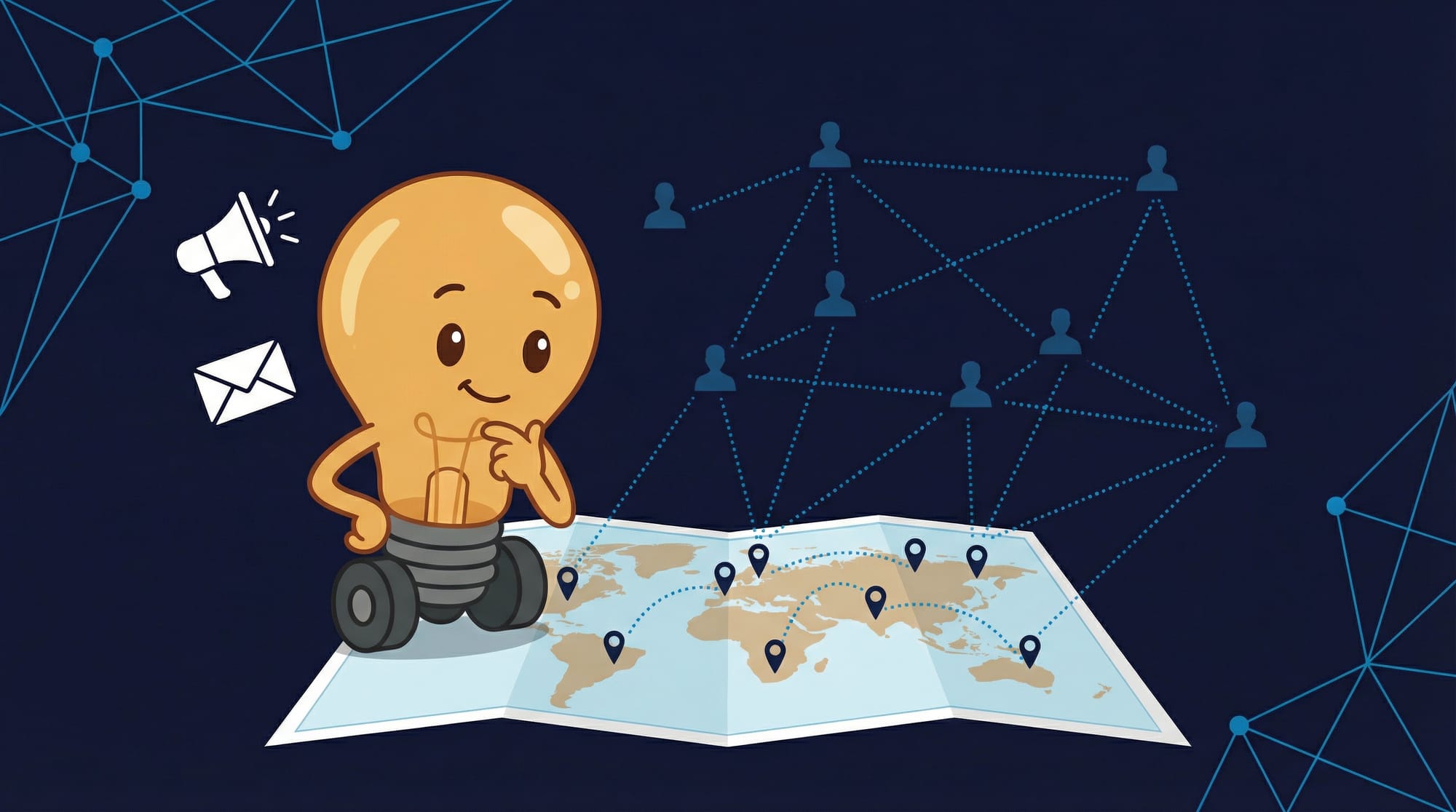
Effective GPT wrapper distribution, according to MKT Clarity's research, focuses on four channels: Product Hunt, AI directories, Reddit, and Twitter.
Each channel has different dynamics:
- **Product Hunt**: Best for launch day visibility. Prepare your listing before Day 7. Good for 50-200 signups if you execute well.
- **AI directories**: Slower burn, longer tail. Submit to 10-15 directories in your first week. They'll drive traffic for months.
- **Reddit**: High risk, high reward. Genuine value gets upvoted. Marketing gets destroyed. Share something useful, not a pitch.
- **Twitter**: Build in public. Share your progress during the 7 days. People root for builders they watch struggle and ship.
Notice what's not on the list: paid ads. Not yet. You don't know your conversion rates. You don't know your customer acquisition cost. Paid ads are for scaling what works, not finding out what works.
If you're thinking about building AI agents or automation products, the distribution channels remain the same—but the messaging changes. Agent products need more education because buyers don't always understand what they're getting.
The Hidden Costs Nobody Mentions
Let's talk about what the "7-day launch" tutorials leave out.
- **Your time isn't free.** Seven days of focused work is 40-60 hours. If you have a day job, that's every evening and weekend. Know the real cost before you commit.
- **Support starts on day one.** Your first customers will have questions. Bugs will surface. Plan 2-3 hours daily for customer communication in weeks two and three.
- **The $1,000 budget is optimistic.** The MKT Clarity protocol targets under $1,000, but that assumes you already have the skills. Budget for at least one tool subscription you didn't anticipate.
- **Legal and compliance aren't optional.** Privacy policy, terms of service, data handling. These take time. Don't launch with customer data and no legal framework.
- **Iteration costs more than launch.** Getting to 1-5 paying customers is milestone one. Getting to 50 paying customers requires real investment in what you learned from the first five.
None of this should stop you. But going in with accurate expectations beats going in with hype. The AI implementation reality is messier than the tutorials suggest.
How Do You Know Your Launch Actually Worked?
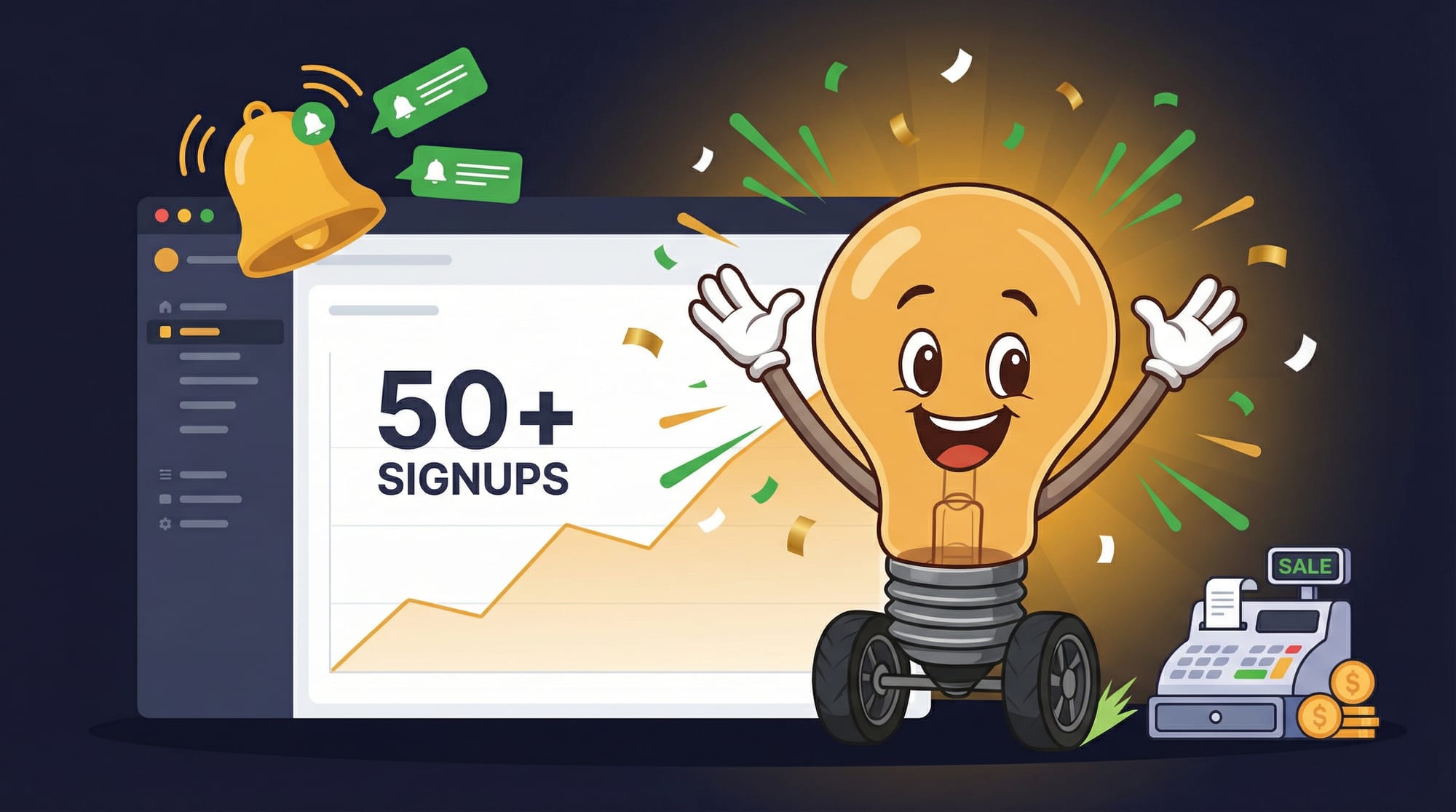
"Success" in week one doesn't mean profitability. It means signal. Here's what to measure:
- **Paying customers (not just signups).** The MKT Clarity benchmark is 1-5 paying customers from 50-200 signups. That's a 2-5% conversion rate. If you're below 1%, your pricing or positioning needs work.
- **Customer feedback quality.** Are paying customers telling you what they want next? That's gold. Radio silence means they might not stick around.
- **API cost per customer.** Calculate this in week one. If it's above 50% of your price point, you have a margin problem that will only get worse at scale.
- **Organic mentions.** Are people sharing your product without being asked? Even one unsolicited share means something's working.
- **Repeat usage.** Do customers come back after day one? One-time curiosity is different from actual value.
The honest truth: most first launches don't hit all these marks. That's fine. The point of a 7-day launch isn't perfection. It's learning. You learn more from 5 paying customers than from 6 months of planning.
Key Takeaways
- A 7-day AI launch is achievable for under $1,000, targeting 50-200 signups and 1-5 paying customers—but it requires disciplined focus on one feature solving one problem.
- The $19-49/month pricing range works for AI wrappers because it covers API costs with margin while staying accessible enough for trials.
- Most AI builds fail because founders treat AI like magic instead of a contractor, build before validating, or ignore cost controls until it's too late.
- Distribution through Product Hunt, AI directories, Reddit, and Twitter outperforms paid ads for first launches—paid comes after you know your conversion math.
- Start customer acquisition on Day 6, not Day 7. Launch day momentum depends on conversations already in progress.
- Your first version should embarrass you. If it doesn't, you waited too long and learned too little.
Frequently Asked Questions
Do I need to know how to code to launch in 7 days?
No. The 7-day protocol emphasizes no-code tools like Bubble or Flowise. Technical skill helps you move faster, but it's not required. What matters more is understanding your customer's problem clearly enough to build a focused solution.
What if I don't get any paying customers in week one?
That's actually valuable data. Zero conversions from 50+ signups means either your pricing is wrong, your positioning is unclear, or you're solving a problem people don't actually want to pay for. Each scenario has a different fix. Talk to the people who signed up but didn't pay.
How much should I charge for my first AI product?
Research suggests $19-49/month for subscriptions or $29 for one-time digital products. The key is pricing high enough to cover your API costs with margin, but low enough that people will take a chance on an unknown product. You can always raise prices later.
Should I patent my AI product idea before launching?
For a 7-day launch? No. Speed matters more than protection at this stage. Most AI wrapper ideas aren't novel enough to patent anyway—the value is in execution and customer relationships, not the concept. Legal protection becomes relevant after you have traction.
What's the biggest mistake first-time AI founders make?
Building before validating. The founders who succeed spend Day 1 talking to potential customers. The founders who fail spend Day 1 coding. Your idea feels valuable to you. That doesn't mean anyone will pay for it. Find out before you build.


